
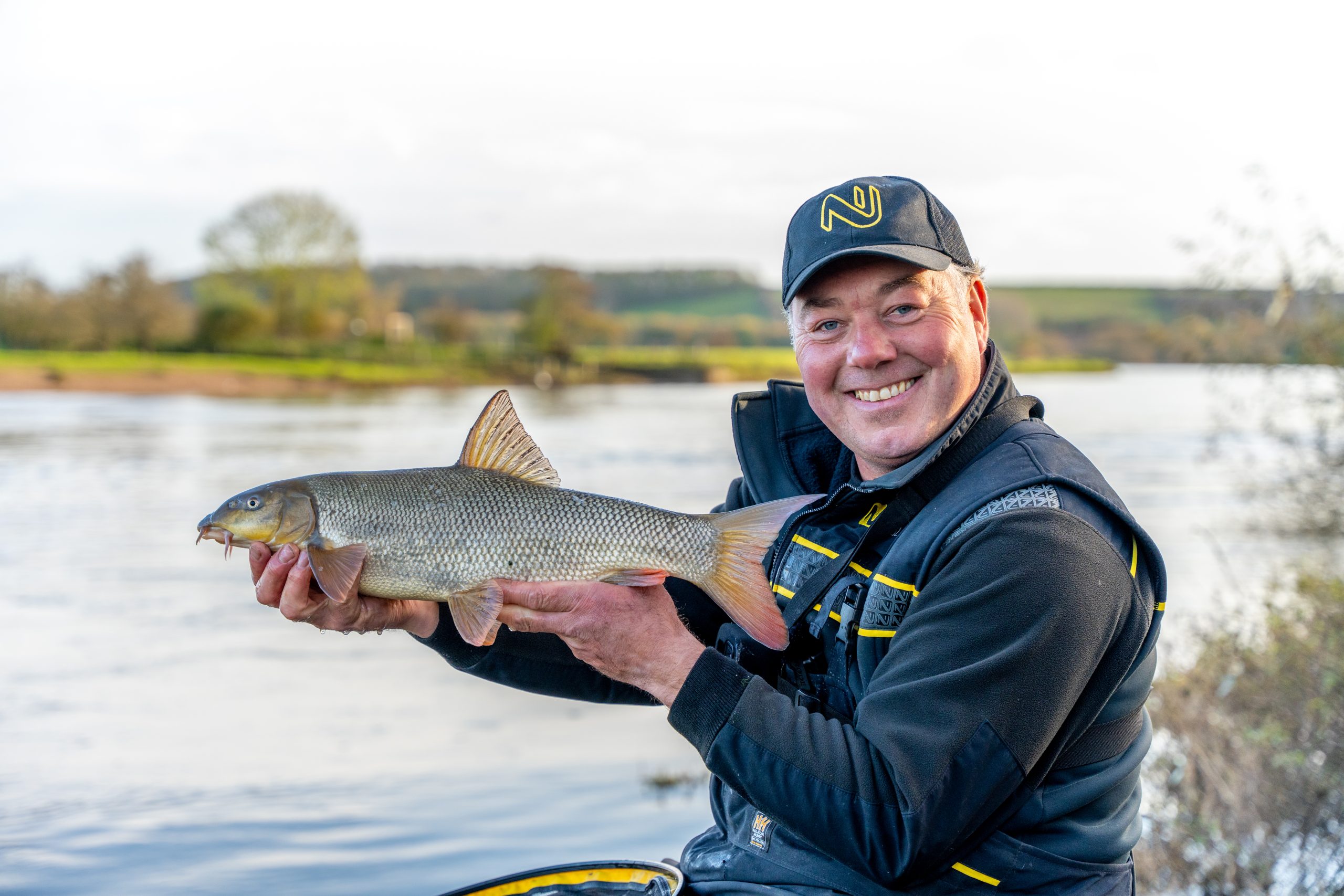
Mick Vials is a master river angler and loves to tackle a raging river when everything is against you!
Mick Vials
Lives – Rotherham
51
Sponsor – NuFish
MF Says – Master Worm Collector
For me the ultimate challenge in match fishing is to conquer a flooded river. These unpredictable and sometimes uncooperative conditions scare match anglers a mile but trust me, nothing is better than beating the conditions and catching a big bonus fish when everything is against you.
Now one thing I must get to straight away is the topic of actually fishing matches on flooded rivers! It seems these days that anglers and organisers wish to cancel river matches after seven drops of rain. I am all for keeping everybody safe, but the art of catching on difficult rivers is being lost.
I cut my teeth as a young angler fishing on the River Trent and throughout the winter we often had to fish league matches on flooded rivers and it became a backbone of my fishing, a key skill that I’d love to help keep alive.
The Venue
Today I am on the aforementioned River Trent on the famous Burton Joyce stretch. In fact I have been very lucky and got a peg on the outfall. However today the peg matters not, and I just want to explain how I work my peg in troublesome conditions like this. The river is carrying a healthy flow thanks to close to three feet of extra water and the outfall is also putting even more flow into the river.
It’s an intimidating spot to fish for the angler who has never fished in these conditions but it needn’t be if you follow some important steps.
Where To Fish
I guess the most obvious question is where the hell do I fish! Well I think you need to actually look at the swim, this sounds obvious BUT how often do you actually sit and look at the water – I mean REALLY look?
It is vital on a flooded river to assess the swim. The tackle we are setting up is minimal and can be assembled quickly so the most important thing is to ensure that you have built a plan as to where you are going to fish.
How flooded the river is will largely dictate where the fish sit within your swim. Let’s look at the margins as they can be fantastic fish holding spots. Provided you are casting onto something fishable (not in among a tree that you can’t see!) then the inside bank can be fantastic. Even big fish can be found seeking shelter in the steadier water of the margins and don’t be put off even if the river is shallow in the margins. Providing it is a clean spot then you have a chance.
This area can be great for smaller species too, perch, roach and dace will always hold up in the margins and a delicate pole rig and light feeding approach can winkle out small fish on difficult winter leagues. However, and it’s a big however… I am a Barnsley Blacks angler and we fish POSITIVE to win. Fiddling around in the margins is great for a few section points in a team match but on the Trent I always feel you have the chance of a chub, barbel or bream. A proper fish that not only gets you a respectable section placing, but could get you an important section win or even a frame place in the match.
So with this in mind I am always looking to target ‘proper’ fish further out into the river. I will always start close into bank and gauge the response but in my opinion you want to be as far out into the river as you can hold bottom with the right tackle on. This gives me the best possible chance of one of those big fish finding my hook bait. Fish such as chub and barbel are more than happy to fight against the flow especially when they are feeding so don’t be frightened of the flow, even if trees are coming down!
Proper Tackle
You cannot fish a flooded river properly without the correct kit. These conditions will render your normal feeder rods useless as they buckle over in the flow. A stiff 13ft or even 14ft feeder rod is needed, we aren’t looking for a rod that bends to the butt like many rods these days, you need something tippy that will remain rigid even when the flow gets strong. I have an old 13ft Dutch Master model with a hollow tip section rather than a standard solid quiver tip. This is roughly 5oz-6oz rating and gives me the right amount of rigidity I need. If you don’t have a rod like this, and they are hard to find these days, I would go for a 5oz tip in a distance style rod or extra heavy feeder rod.
The reel and line needs to be super tough and I have gone for a distance style reel loaded with a soon to be released NuFish mono in 10lb. There is no point stepping down from this as I could realistically hook a double figure barbel here and if I do, I need to at least give myself a chance to land it. Hooklength is a 75cm length of the same material in 8lb. The rig is a simple running set up. This is crucial because using heavy leads in flooded rivers is a recipe for getting snagged and the last thing you need is a fixed rig and a fish running through something. The running rig gives you the best chance of the fish working itself free.
Hook is a size 6 or 8 Kamasan B983. This is an amazing hook pattern that I use an awful lot even in sizes 14 and 16 for my bream fishing. Its nice and strong and holds the lobworm hook bait perfectly. It’s worth saying that having a selection of large flat leads is essential. There are loads on the market these days but look for the specimen areas of the shop and you will need a selection between 2oz and 6oz. These flat leads hold the bottom well and give me great presentation. A 6oz lead is a serious bit of kit but don’t be scared of this extra weight. If you have the right rod they can more than cope with this kind of size.
Bait!
I am targeting this river today with a large single hook bait and will not be introducing any feed initially or at all if I can get bites. Flooded fishing is more about finding the fish and being in the right place when the fish feed as opposed to creating a bed of bait and waiting for the fish to come. Plus any loose feed, even introduced with a feeder, is likely to be flushed through the swim.
So we need something irresistible for the fish. Pellets, boilies and meat are all good options. These smelly offerings can be deadly on their day especially where barbel are concerned. But this style of fishing is all about being confident that you WILL get a bite and when fishing is like this, I am super confident when I have a big freshly picked lobworm on the hook!
It is all we used to use and given the choice it’s all I would choose to use now. I collect the worms myself on mild damp evenings and keep them in soil with some damp moss and grass in an old pillow case.
Hooking
I alluded to the fact that I might only get one or two bites in five hours so I need to make sure that I give myself the best chance of hitting it. With this in mind I like to thread the whole lobworm onto the hook and up the line.
I pass the hook through the saddle and then out before then hooking the worm one again near the tail. A No4 shot is then positioned on the line up near the saddle to keep the worm straight on the line. This presentation is, in my opinion, the ultimate way to use a full lob worm. It gets the hook right down at the tail end and the fish can’t really get the bait in its mouth without becoming hooked! It is fiddly to do but when bites are hard to come by, it is worth every second.
You can also break the worm in two and hook two half of the worm. This is much easier and can work well especially on the good days where there are more bites. But if it’s a tough day in the winter then I am threading the bait on every time.
Working The Swim
This swim is begging to be searched and there are a few areas that I feel could be good. It is perhaps unusual here as the outfall and its flow creates an inviting crease close to the bank and I decide to start close in just an underarm flick slightly downstream. I also received a tip off that chub can be caught really close in on this swim so id be foolish not to try it, even though it goes against my own advice of being brave and fishing out into the main river!
Amazingly I get a bite immediately but it is missed and this sets a trend. Missed bites and a balding scalp! It can be so frustrating to miss bites on tough days but I know something is amiss and judging by the rattles I can’t help but feel they are small roach or dace. Big fish such as chub and barbel rarely let go of a fat juicy lobworm so I am finding it hard to believe these bites are anything other than small fish rattles. But I must admit to being drawn in to them.
After a not so quiet word with myself I am soon upping the ante and with a 5oz lead I go searching out into the main flow of the river. A huge bow of line is paid off the reel and the lead is holding nicely whilst that hollow tip section nods in the flow. It’s just a waiting game now, strategically casting every five to ten minutes searching the swim.
It doesn’t take long neither and my very first cast out into the torrent sees a barbel try to steal my rod from me! At 5lb it is no monster for this venue but what a thrill to catch them in such circumstances. The fight is immense and is a timely reminder why you must not compromise with your tackle.
Another lobby is prepared and soon enough another big drop back comes and a beautiful chub is safely landed. Two fish for 9lb plus in just 15minutes. This is what I am talking about, fish positive for positive results.
Feeding Windows
In winter the time of day is a massive factor and it is rare that you will get bites all day. In fact the feeding window may be very short indeed. Today I have nailed those two fish within 15minutes and haven’t had a proper fish bite before or since.
It is therefore essential to keep the faith. It would be so easy to sit biteless for three hours and give up hope and go chasing the small fish in the margins. But you must hang in there, keep confident and your chance will come. Quite often bites will either come in the first half an hour or the last 90minutes so remain sharp and reap the rewards because I bet most anglers around you will bottle it!
Conditions and Rubbish!
A rising river can present a frustrating angling experience and that is what I have been faced with today. Traditionally barbel will feed readily on a warm rising river while chub prefer settled conditions when the river has been high for a while or a falling river.
Cold floods and snow melt can be awful conditions and you should be prepared for a grueller in those conditions. There is so much rubbish on the roads these days to keep them safe (salt and chemicals etc) and once this goes into the rivers the fish can simply stop feeding. But there is always a bite to be had.
Floods also bring debris and this can wreak havoc with your presentation. Quite often you can hold the bottom well only for some leaves to collect on your line and move everything out of position. Worse still these leaves can work their way down the mainline and mask the hook bait.
One little trick is to have a small float stop positioned 18inches above the lead. This collects the debris and while your tip will still be bent over, at least your end tackle will remain in good condition with your hook bait clean.
But it is important to cast regularly when leaves are in the river especially in the late autumn as you must keep checking that your hook bait is fishing.
Confidence Catches
The final point to make is the importance of being confident. I guess the years of me fishing like this has given me unwavering faith that I will catch that bonus fish. But, if you haven’t done it before, try going for a pleasure day and work the river until you get bites and make sure you don’t let the river beat your tackle. The last thing you want is to turn up on a match day for your team and be faced with a raging river only for your kit to let you down. And nothing beats actually catching a few on this approach to give you the faith you need.
After all just chucking a single lobworm out into the river can take a while to get your head around, but trust me it works, and when it does its awesome!
Add comment
You must be logged in to post a comment.